
Refrigerator Not Cooling? 9 Most Common Causes (San Diego Repair Guide)
Refrigerator not cooling? Learn the 9 most common causes—dirty coils, evaporator fan, defrost system—and when to call a professional refrigerator repair technician in San Diego.
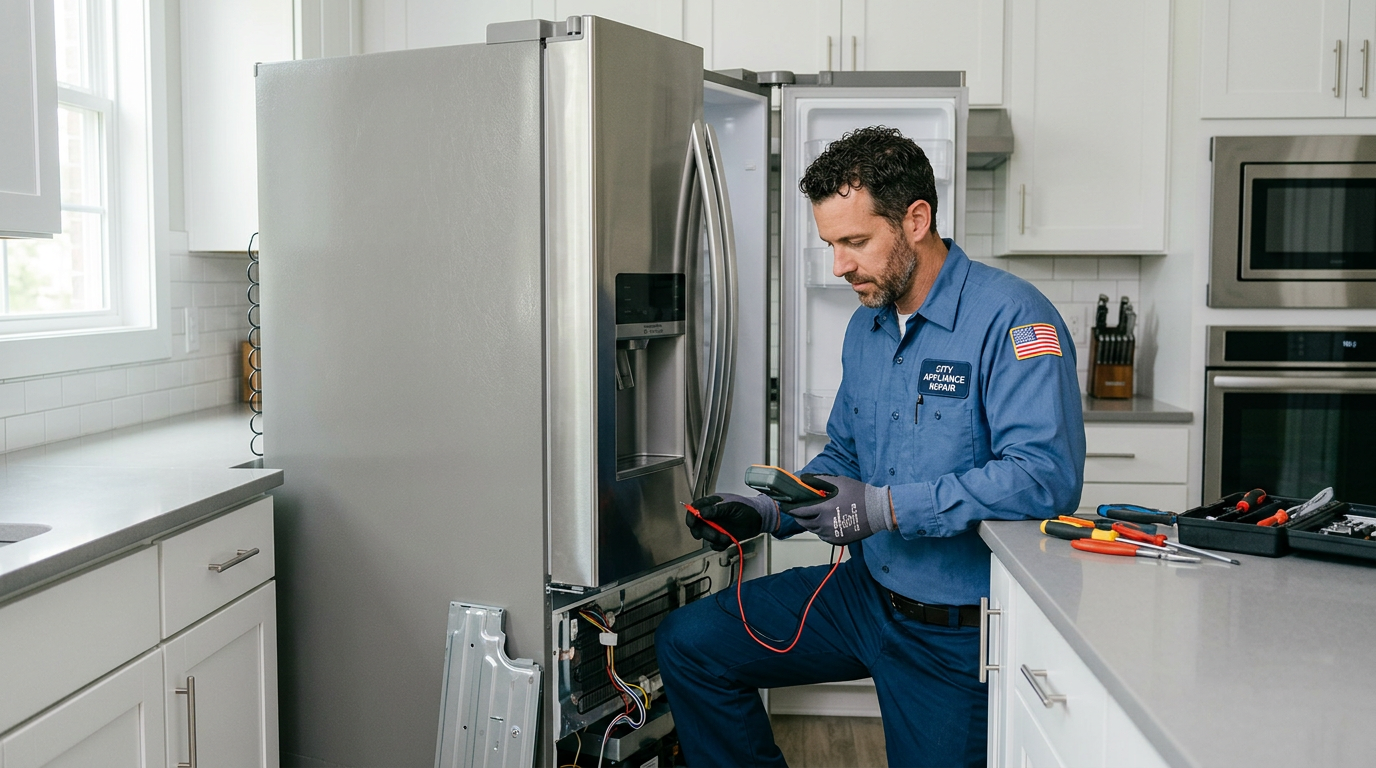
If your refrigerator is not cooling, this is one of the most common appliance problems homeowners face. A fridge that stops cooling can quickly lead to spoiled food, water leaks, and expensive damage if the issue is not addressed quickly.
Many homeowners search online for: refrigerator not cooling but freezer works, fridge not cold enough, refrigerator repair near me, refrigerator repair San Diego.
In this guide, we explain the most common reasons refrigerators stop cooling, what you can check safely, and when to call a professional refrigerator repair technician in San Diego.
1 Why Your Refrigerator Is Not Cooling
Modern refrigerators rely on several systems working together: compressor, evaporator fan, condenser coils, temperature sensors, and defrost system.
When one component fails, the refrigerator may stop cooling completely or cool inconsistently. Below are the 9 most common causes of refrigerator cooling problems.
2 9 Most Common Causes of Refrigerator Cooling Problems
Dirty Condenser Coils (Most Common Problem)
These coils release heat from the refrigerator system. When covered with dust, grease, or pet hair, heat cannot escape properly—causing the fridge to run longer, struggle to reach temperature, and eventually stop cooling efficiently.
Symptoms:
- • Fridge warm but freezer cold
- • Compressor running constantly
- • Refrigerator feels hot on the back or bottom
Cleaning condenser coils can often restore cooling performance.
Evaporator Fan Motor Failure
The evaporator fan circulates cold air from the freezer to the refrigerator section. If this fan stops working, cold air cannot reach the fresh food compartment.
Symptoms:
- • Freezer works but refrigerator warm
- • Weak airflow from vents
- • Unusual noise from freezer area
This is a very common refrigerator repair issue.
Faulty Thermostat or Temperature Control
A faulty thermostat may prevent the refrigerator from activating the cooling cycle. Temperature control components can fail over time due to electrical wear.
Signs:
- • Fridge not cooling at all
- • Compressor not running
- • Temperature fluctuating randomly
Defrost System Failure
Most modern refrigerators use a defrost system to prevent ice buildup on evaporator coils. When this system fails, frost accumulates and blocks airflow. Defrost heater, sensor, or control board problems can cause this.
Symptoms:
- • Fridge not cooling but freezer works
- • Thick ice behind freezer panel
- • Cooling improves temporarily after unplugging
Broken Start Relay or Capacitor
The compressor relies on a start relay and capacitor to start properly. If the relay fails, the compressor may attempt to start but shut off repeatedly.
Signs:
- • Clicking noise from back of refrigerator
- • Compressor trying to start but stopping
- • Refrigerator not cooling at all
This repair is relatively common and usually quick to diagnose.
Blocked Air Vents
Refrigerators distribute cold air through internal vents. If these vents are blocked by food containers, airflow becomes restricted.
Symptoms:
- • Uneven cooling
- • Certain areas of fridge warm
- • Freezer cold but fridge warm
Simply reorganizing food storage can sometimes fix this issue.
Faulty Temperature Sensors
Modern refrigerators use thermistors to monitor internal temperature. If a sensor fails, the refrigerator may not cool correctly because it receives incorrect temperature data.
Signs:
- • Refrigerator cooling inconsistently
- • Compressor running too often or not enough
- • Error codes on display panels
Sensor replacement is a common refrigerator repair service.
Control Board Failure
The electronic control board is essentially the brain of the refrigerator. If it fails, cooling cycles may stop completely. This type of repair requires proper electrical diagnostics.
Symptoms:
- • Refrigerator suddenly stops cooling
- • Fans not activating
- • Display panel malfunctioning
Compressor Failure (Serious Issue)
The compressor is the heart of the refrigerator cooling system. When it fails, the refrigerator cannot circulate refrigerant. Compressor replacement is one of the most complex refrigerator repairs.
Signs:
- • Refrigerator not cooling at all
- • Compressor extremely hot
- • Loud humming noise
3 Refrigerator Not Cooling But Freezer Works
This is one of the most common service calls. If your freezer is cold but refrigerator warm, the problem usually involves:
- Evaporator fan
- Airflow blockage
- Defrost system failure
These issues prevent cold air from reaching the refrigerator compartment.
4 What You Can Check Before Calling a Technician
Before scheduling refrigerator repair, check these simple things:
Check Temperature Settings
Make sure the refrigerator is set between 37–40°F.
Inspect Door Seals
Damaged door gaskets allow cold air to escape.
Clean Condenser Coils
Dust buildup can drastically reduce cooling efficiency.
Check Airflow Vents
Make sure food containers are not blocking internal vents.
5 When to Call Refrigerator Repair in San Diego
You should call a technician if:
- Refrigerator not cooling after basic checks
- Freezer cold but fridge warm
- Loud compressor noises
- Water leaking inside refrigerator
- Food spoiling quickly
Professional diagnosis prevents further damage to the compressor or sealed system.
6 Professional Refrigerator Repair in San Diego
Constant Appliance Service provides same-day refrigerator repair in San Diego for all major brands:
Our technicians diagnose cooling issues quickly and provide reliable appliance repair solutions.
Related Services
Frequently Asked Questions
Why is my refrigerator running but not cooling?
Why is my freezer cold but my fridge warm?
Can a refrigerator stop cooling because of dirty coils?
How much does refrigerator repair cost in San Diego?
Need Appliance Repair Today?
Call us now for same-day service. Our expert technicians are ready to help!